An implant placed into insufficient bone will fail. Bone grafting before implant placement is not an optional upgrade — it is the clinical foundation that determines whether an implant integrates permanently or fails within years. At Ferrari Dental Clinic, Dr. Habib Zarifeh evaluates bone volume at every implant assessment and performs all necessary grafting as part of a single coordinated treatment plan.
Bone Grafting Procedures
Each bone grafting procedure addresses a specific clinical deficit. The right procedure for each case is determined by CBCT imaging and clinical assessment — not by a standard protocol applied to every patient.
When a tooth is extracted, the bone that surrounded its root begins to resorb immediately — losing up to 50% of its volume within the first 12 months. Socket preservation grafting is performed at the time of extraction, placing bone graft material into the empty socket to maintain its dimensions while the site heals. This simple step avoids the need for more complex ridge augmentation procedures later and preserves ideal bone volume for implant placement at 3 to 4 months.
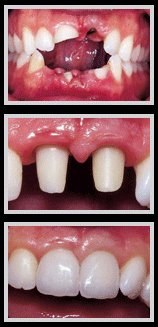
The upper back jaw is anatomically the most challenging site for implants — the maxillary sinus often leaves insufficient bone height between the sinus floor and the ridge crest. A sinus lift procedure elevates the sinus membrane and places bone graft material beneath it, creating the vertical bone height required for a stable implant. Two techniques are used depending on available bone: the lateral window approach for cases with less than 4mm of bone height, and the transcrestal approach when 5mm or more is available.
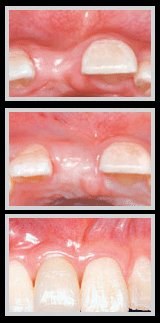
Guided bone regeneration uses a resorbable or non-resorbable membrane placed over bone graft material at the defect site. The membrane acts as a barrier, preventing soft tissue from growing into the space and allowing bone cells to repopulate the area undisturbed. GBR is used for horizontal bone defects around implants, localised bone loss around existing implants (peri-implantitis), and as an adjunct to other grafting procedures where membrane coverage improves regenerative predictability.
Severely resorbed ridges — where bone volume is insufficient in both width and height — require onlay block grafting. A block of bone (from the patient's own jaw, chin, or from a bone bank) is fixed to the deficient ridge to rebuild its dimensions before implant placement. This is the most surgically demanding bone grafting procedure and is performed at CMC Hospital under full surgical conditions. Healing typically requires 4 to 6 months before the site is ready for implant placement.

Ferrari Dental Clinic uses four categories of bone graft material depending on the clinical indication. Autogenous bone (harvested from the patient's own body) produces the most predictable regeneration but requires a second surgical site. Allograft (processed human donor bone) avoids a second harvest site. Xenograft (bovine-derived mineral matrix, typically Bio-Oss) provides excellent scaffold properties with very slow resorption — ideal for sinus lifts. Alloplastic synthetic materials complete the range for cases where biological materials are contraindicated.
Why Bone Grafting Determines Implant Success
Osseointegration — the biological fusion of an implant with surrounding bone — requires sufficient bone volume on all sides of the implant fixture. When bone is deficient in width or height, the implant is exposed, micro-movement occurs during healing, and the integration process is compromised. The result is implant failure, either immediately after placement or within the first few years of function.
Bone grafting eliminates this problem by restoring adequate bone volume before or at the time of implant placement. Done correctly, the grafted site is indistinguishable from native bone within 4 to 6 months, and the implant placed into it has the same long-term prognosis as one placed into pristine bone. Dr. Habib Zarifeh assesses every implant candidate for bone volume at the initial consultation — and recommends grafting whenever the clinical evidence indicates it is necessary for long-term success.